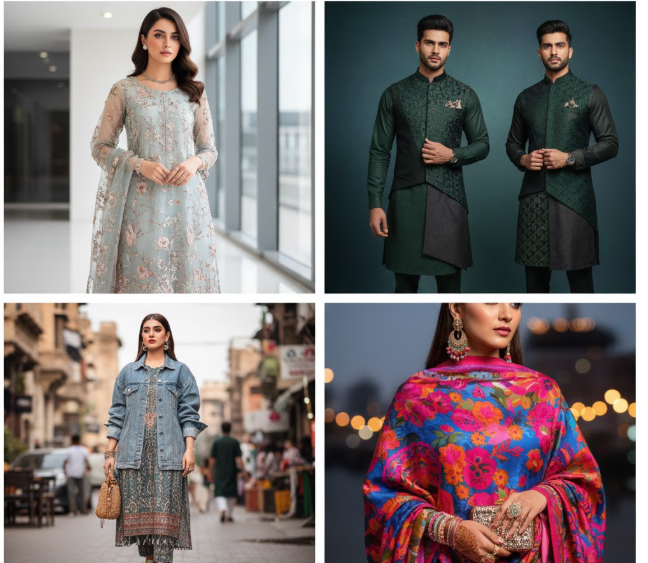
We have often observed that in Pakistan, fashion doesn’t necessarily follow the global four-season calendar. Instead, it follows the Drama and Film Industry. We have noticed that a single blockbuster drama serial can change the silhouette of an entire nation overnight. One month everyone is chasing long, floor-length maxis because of a specific character, and the next, short shirts are back in every boutique.
In our experience, Pakistani fashion is a reactive culture. We don’t look at runways; we look at our screens, our local tailors, and what women are actually wearing at the weddings we attend.
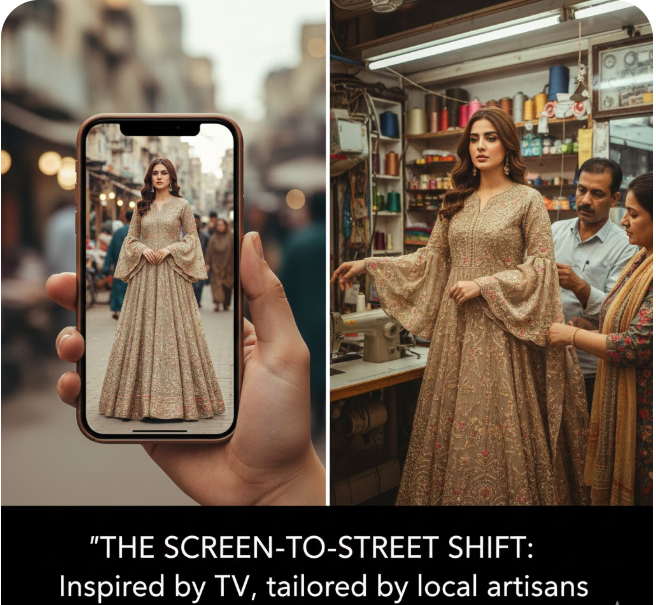
The Screen-to-Street Shift
Lately, we have seen that the “Designer vs. Boutique” war is being won by local boutiques and smart tailors. While big designers still showcase heavy, avant-garde pieces, we’ve observed that real women are taking screenshots of TV actresses and heading straight to their local stitching units.
I noticed at three weddings I attended recently that the heavy, 12-kg lehngas are slowly losing popularity. Instead, women are choosing lighter, more fluid fabrics that allow them to move and enjoy the event.
When a popular actress wears a specific sleeve cut or a “Kalidaar” on screen, we see it appearing in local markets within days. It isn’t about the “year 2025”; it’s about the current hit show.
Micro-Trends in Stitching and Sleeves
We have noticed some quiet shifts that usually go unmentioned in big fashion blogs. These small changes show a move toward Practical Wear.
- Stitched Sleeves: Over the past few months, we’ve seen more women asking tailors for permanently stitched, comfortable sleeves rather than the detachable or narrow-cut styles that were popular a few years ago.
- Lighter Dupattas: One change we didn’t expect was how many women are skipping the heavy, “Kaam-waala” dupatta. At recent evening functions, we noticed lighter chiffon or even organza dupattas that are draped simply over one shoulder or not used at all. Comfort and ease of movement seem to matter more now than heavy embroidery.
The Rise of “Sustainable” Reusing
With fabric and embroidery prices rising significantly, we have observed a very practical cultural shift.
We are seeing more women taking older, high-quality fabric from their mothers’ wardrobes and giving them a modern “Drama-inspired” cut.
Boutiques are now focusing on “Minimalist Luxe.” Instead of covering every inch of the fabric with thread-work, they are using unique buttons, lace trimmings, and smart silhouettes to create a premium look without the designer price tag.
Why Embroidery is Losing the Lead
In our experience, heavy embroidery is no longer the primary status symbol.
We’ve noticed women are now spending more on the quality of the fabric—like pure silks and hand-woven lawns—rather than the amount of “Tilla” work on it.
In the Pakistani climate, and with the lifestyle of modern working women, heavy clothes are simply not practical. We have seen a preference for “Solid Colors” (Monochrome) which look elegant on camera and are much easier to manage.
Jewelry Pairing Changes
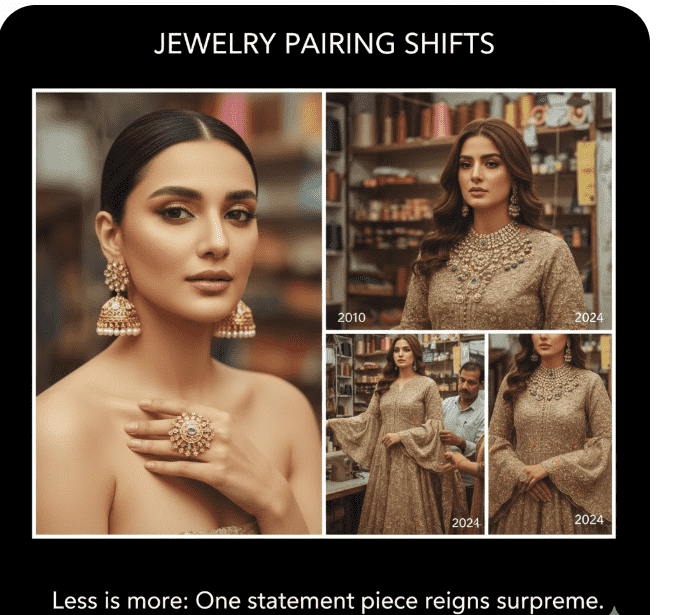
We’ve also observed a shift in how jewelry is paired with these screen-inspired outfits.
Instead of the full “Nauratan” sets, women are choosing one “Statement Piece”—usually heavy earrings or a large ring—and leaving the neck bare. This aligns with the minimalist aesthetic we are seeing on TV.
Practical Takeaway for Your Wardrobe
If you are looking to update your style, don’t just follow a “Trend List.”
Prioritize Comfort: If you can’t walk comfortably in it for two hours, it’s already out of style.
Watch the Silhouettes: See if the current popular dramas are leaning toward long or short cuts.
Invest in Tailoring: A good tailor can make a 3,000 PKR fabric look like 30,000 PKR just by getting the “Screen Cut” right.